Dr Dhananjay kumar has not only pioneered Leadless pacemaker in Bihar and Jharkhand, he is also a proctor for this newer therapy and he train cardiologist to this new age technology. He is performing around 8-10 cases per year.
What is a leadless pacemaker?
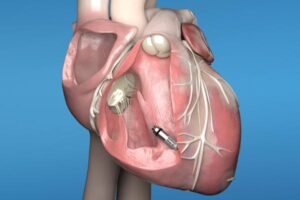
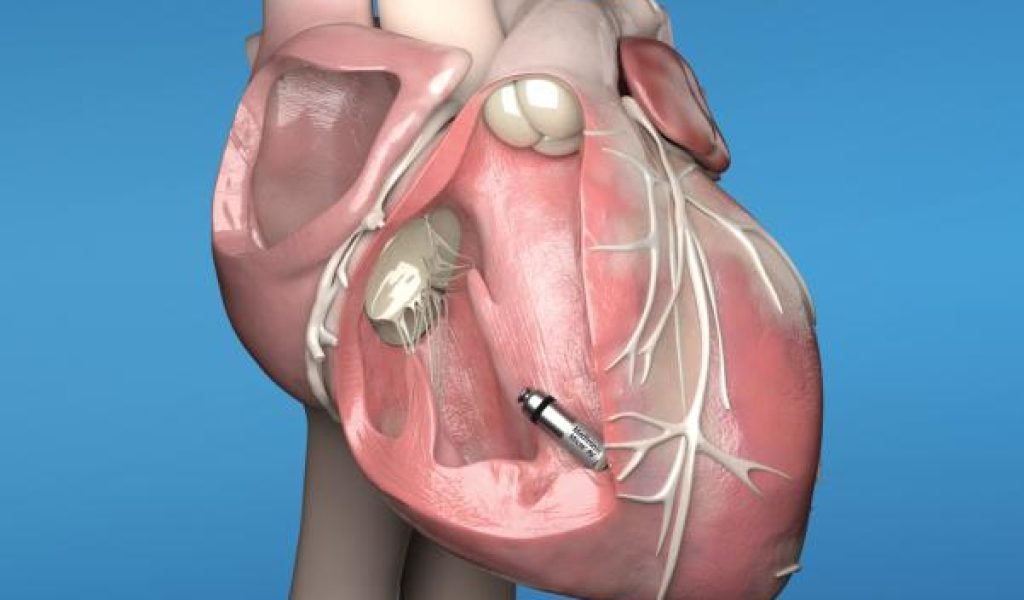
A leadless pacemaker is a small, one-piece device that a healthcare provider inserts into your heart to prevent slow heart rates. All the parts of a leadless pacemaker are inside one device. There’s no separate battery. And it doesn’t need leads (wires) because the whole device sits in your heart’s right ventricle (heart chamber).Leadless pacemakers are about 1 to 1.5 inches (3 to 4 centimeters) long. The device looks like a small metal cylinder. It’s smaller than an AAA battery.
How does a leadless pacemaker work?
A healthcare provider programs and customizes your device to send small electrical impulses to your heart muscle when it needs it. A leadless pacemaker can sense your heart’s own electrical signals. It can provide additional electrical impulses when your natural ones aren’t frequent enough.
Who is suitable for a leadless pacemaker?
Pacemakers help people who have bradyarrhythmias, or slow heart rates. These are slow heart rhythms that may occur as a result of disease in your heart’s conduction system.
A provider may implant a leadless pacemaker when people have:
- A need for pacing some of the time.
- Atrial fibrillation (Afib) with slow heart rates or pauses.
- Atrial fibrillation or sinus rhythm with AV block.
- Bradycardia-tachycardia syndrome (slow and fast heart rhythms).
- Bradycardia with symptoms.
- Some people aren’t candidates for a leadless pacemaker. Currently, the device is available only for people with certain medical conditions and a slow heart rate (bradycardia) who only need pacing in one heart chamber.
Benefits of a leadless pacemaker include:
- No need for connecting leads (wires), a separate power source or the creation of a surgical pocket on the chest to hold the power source. These are the most common causes of traditional pacemaker complications (infections or broken leads).
- No lump under the skin on the chest or leads anchored to the muscle, which can cause minor discomfort.
- No chest incision or scar from generator placement and replacements.
- A shorter procedure time than a traditional pacemaker implant procedure.
With no wires or generator, there’s no need to limit upper body activity after the implant. - It’s one piece, which is 90% smaller than a traditional pacemaker.
- It’s safe to use in an MRI (magnetic resonance imaging) machine.
- It’s appropriate for some people who aren’t candidates for a traditional pacemaker.