Interventional cardiology has continuously evolved to address increasingly complex coronary lesions. Among these, heavily calcified coronary artery disease remains one of the greatest procedural challenges, often limiting successful balloon dilatation and optimal stent deployment. Rotational atherectomy has emerged as one of the most important plaque-modification techniques to overcome these limitations and has retained its relevance despite the arrival of several newer calcium-modifying technologies.
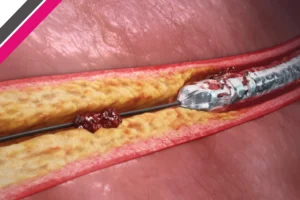
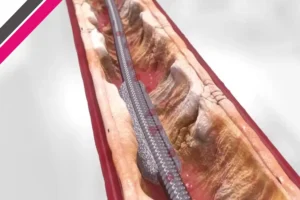
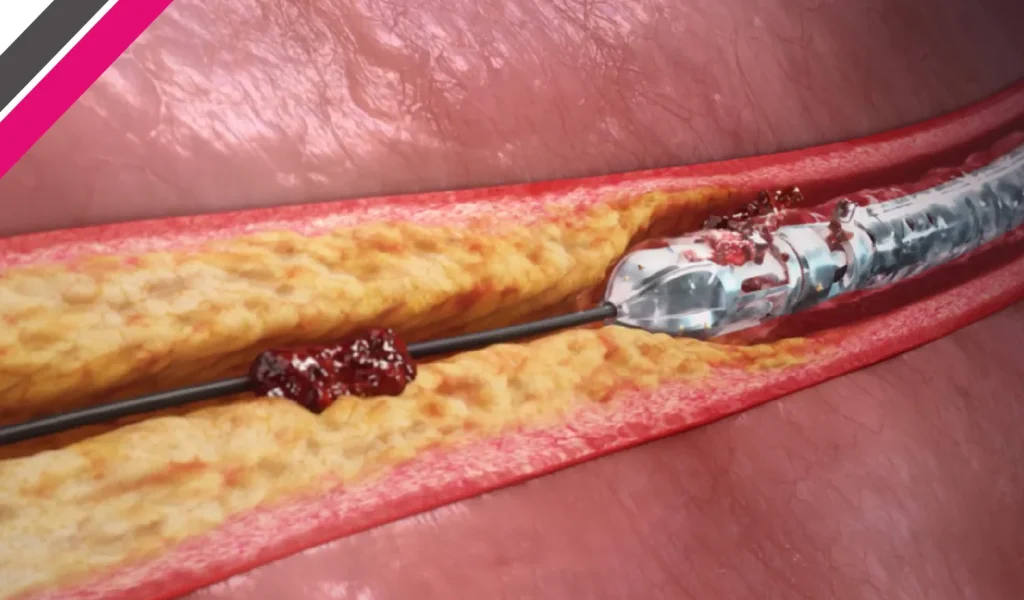
Rotational atherectomy was introduced in the late 1980s and gained widespread acceptance in the 1990s with the development of the Rotablator by Boston Scientific. The technique works through a diamond-coated burr rotating at extremely high speeds, usually between 140,000 and 180,000 revolutions per minute. This high-speed rotation selectively ablates rigid calcified plaque into microscopic particles small enough to pass safely through the coronary microcirculation. The original concept was aggressive plaque debulking, but as interventional practice evolved, particularly after the introduction of drug-eluting stents, the role of rotational atherectomy shifted toward lesion preparation rather than debulking.
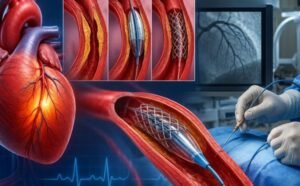
This evolution significantly changed procedural philosophy. Instead of attempting maximal plaque removal, modern rotational atherectomy aims to modify calcium sufficiently to improve lesion compliance, facilitate device delivery, and ensure optimal stent expansion. This transition has been crucial because inadequate stent expansion in calcified lesions is one of the strongest predictors of restenosis and stent thrombosis. Today, rotational atherectomy is considered a lesion-modification strategy that enables safer and more effective definitive PCI.
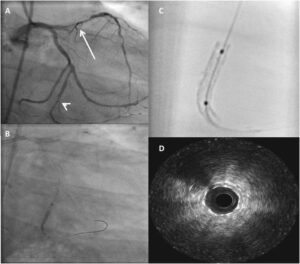
The primary indication for rotational atherectomy is severely calcified coronary stenosis where conventional balloons either fail to cross or fail to adequately dilate the lesion. It is particularly valuable in undilatable lesions resistant to high-pressure non-compliant balloons or specialty balloons such as cutting and scoring balloons. It also plays an important role in facilitating stent delivery through heavily calcified and tortuous vessels. In selected situations, it can be used for underexpanded stents caused by deep calcium, where conventional balloon strategies have failed.
Rotational atherectomy has special importance in complex high-risk PCI, including left main calcification, diffuse multivessel calcific disease, and interventions in elderly patients with advanced coronary calcification. In these anatomies, proper lesion preparation is critical to achieving durable procedural success. The increasing age of patients undergoing PCI and the rising prevalence of diabetes and chronic kidney disease have made calcified coronary disease more common, further increasing the relevance of this technology.
Despite its effectiveness, rotational atherectomy remains technically demanding and presents several procedural challenges. It has a steep learning curve and requires a thorough understanding of burr sizing, rotational speed, pecking motion, and wire bias. Appropriate burr-to-artery ratio, generally around 0.5 to 0.6, is essential to balance efficacy and safety. Excessively aggressive burr advancement can increase procedural complications without improving outcomes.
Since 2022, Dr. Dhananjay Kumar has carried the distinguished responsibility of serving as a trainer and proctor for rotational atherectomy, selected by Boston Scientific for this highly specialized role. This recognition reflects not only his technical expertise but also his commitment to advancing complex coronary intervention practices across the country.
Rotational atherectomy remains one of the most technically demanding procedures in interventional cardiology, requiring precise understanding of lesion selection, burr sizing, wire manipulation, complication management, and procedural strategy. Mastering this technology demands both extensive experience and disciplined training. Through his role as a proctor, Dr. Kumar has been actively involved in mentoring cardiologists and guiding catheterization laboratories in safely adopting this advanced plaque-modification technique.
Over the past several years, he has played a key role in helping numerous cardiologists and multiple cardiac centres incorporate rotational atherectomy into their routine complex PCI practice. His hands-on training, case-based guidance, and procedural mentorship have enabled many operators to gain confidence in managing heavily calcified coronary lesions that were previously considered difficult or unsuitable for conventional angioplasty.
By facilitating the wider adoption of rotational atherectomy, Dr. Kumar has contributed significantly to improving treatment options for patients with complex calcified coronary artery disease. His efforts continue to strengthen the practice of contemporary interventional cardiology, ensuring that more patients can benefit from advanced revascularization strategies delivered with safety, precision, and expertise.