Coronary DEB/DCB technology started entering routine interventional cardiology practice in India approximately between 2011 and 2013, initially at high-volume tertiary cardiac centers. Its adoption was relatively slow in the early years because of cost considerations, limited device availability, and the learning curve associated with optimal lesion preparation and procedural execution.
Dr. Kumar was among the early adopters of this technology, which provided him with substantial hands-on experience and deep procedural expertise in stent-less coronary intervention. His early and sustained engagement with this evolving field enabled him to develop significant proficiency in metal-less PCI strategies. Owing to his extensive experience in stent-less PCI, he was invited as faculty at the first Asia Pacific Stentless PCI Conference 2026, in addition to several other national academic forums. His clinical series of 225 stent-less PCI cases was also presented at EuroPCR 2025, highlighting his important contribution to advancing the adoption and scientific understanding of this contemporary “leave nothing behind” revascularization strategy.
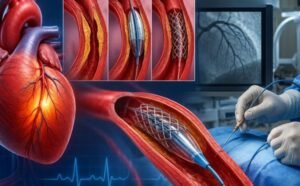
Stent-less PCI refers to coronary intervention strategies in which coronary blood flow is restored without leaving a permanent metallic stent inside the artery. The concept has gained major attention in contemporary interventional cardiology because permanent stents, although lifesaving, may later lead to complications such as in-stent restenosis, late stent thrombosis, chronic vessel inflammation, impaired vasomotion, and prolonged requirement of dual antiplatelet therapy. The modern philosophy of “leave nothing behind” aims to treat the culprit lesion while preserving natural vessel physiology.
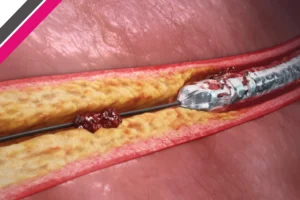
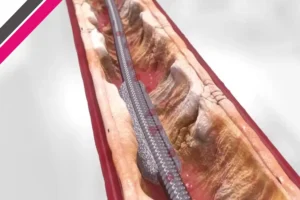
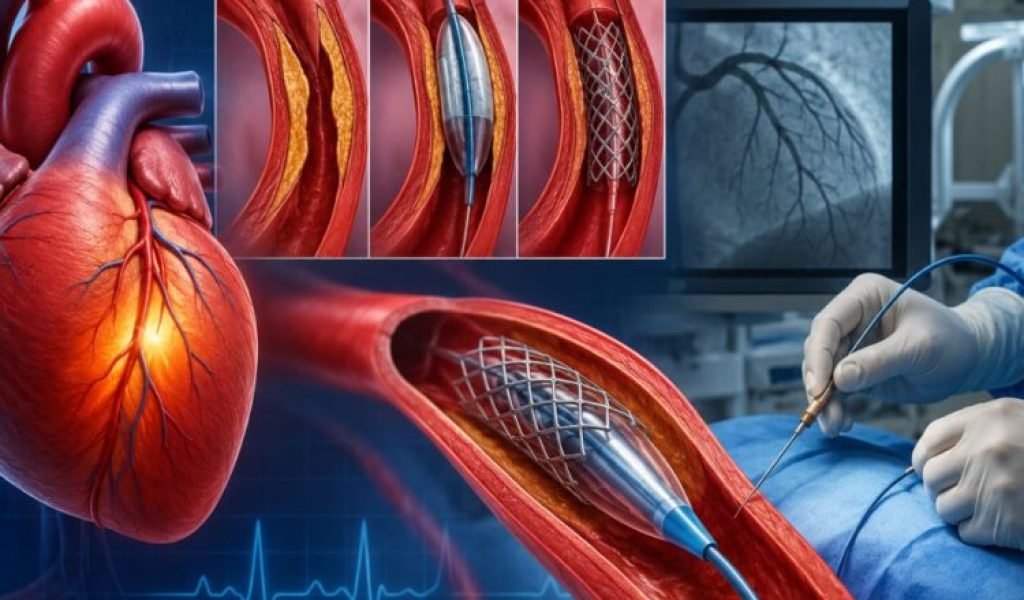
The earliest form of stent-less intervention was plain old balloon angioplasty (POBA), where a balloon alone was used to dilate the stenotic segment. However, POBA was associated with significant rates of elastic recoil, flow-limiting dissection, and restenosis, which eventually led to widespread adoption of stents. In the current era, the most important advancement in stent-less PCI is the use of drug-coated balloons (DCB) or drug-eluting balloons. These balloons deliver antiproliferative drugs such as paclitaxel or sirolimus directly into the vessel wall without leaving any permanent scaffold behind. DCB-only angioplasty has shown particularly good results in in-stent restenosis and small vessel coronary artery disease, and is increasingly being explored for selected de novo lesions as well. The major advantages include preservation of vessel anatomy, lower metal burden, shorter duration of dual antiplatelet therapy, and avoidance of late stent-related complications.
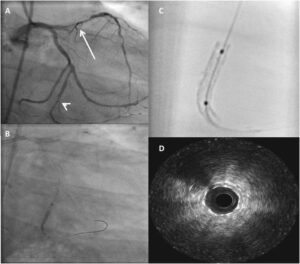
Successful stent-less PCI depends heavily upon meticulous lesion preparation. Adequate plaque modification with minimal residual stenosis, good distal flow, and absence of major dissection are essential prerequisites before avoiding stent implantation. In calcified lesions, technologies such as intravascular lithotripsy or atherectomy may be used prior to DCB angioplasty to optimize vessel compliance and reduce recoil. Contemporary stent-less strategies also rely extensively on intracoronary imaging modalities such as Optical Coherence Tomography and Intravascular Ultrasound, which help assess plaque morphology, calcium burden, vessel sizing, and procedural safety.